Efficiency Today for a Sustainable Tomorrow
Water is one of our most valuable natural resources, and using it responsibly is essential for both businesses and the environment. Even in Scotland’s wet climate, sustainable water management helps protect water supplies, reduce energy use, and lower operational costs.
At Intelligent Water, we help businesses understand their water usage and identify opportunities to improve efficiency. Through smarter monitoring, improved processes, and tailored advice, we support organisations in reducing their environmental impact while maintaining reliable operations.
Improving water sustainability benefits both your business and the wider environment — helping reduce costs, support sustainability targets, and demonstrate responsible resource management.
Speak to our team to learn how we can help improve your water sustainability.
The energy needed to move, treat and use water for both residential and commercial purposes amounts to 6% of all CO2 emissions in the UK.
Carbon emissions are bad news for the environment and climate change, with hotter drier summers becoming the norm by 2040. Less predictable rain fall results in greater drought risk and possible water shortages in the UK.
Water shortages have an impact across the ecosystem. As an example it impacts agriculture. Agriculture impacts food supplies. Food supplies impact cost of living, and we all understand the impact of cost of living on our finances.
Intelligent Water are committed to supporting our customers reduce water usage. It’s good for your business and good for the environment too. Why not ask our team about water saving devices, such as Automatic Meter Reading giving you the ability to track and manage usage real time.
There are lots of quick and practical ways to reduce your water usage. One of the best is as simple as submitting regular meter readings via your Customer Portal.

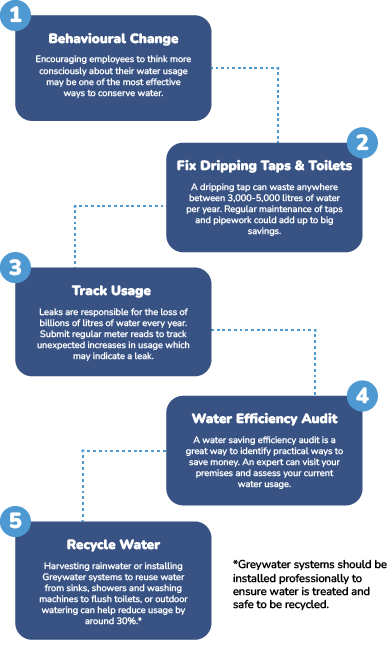
This highlights the key actions businesses can take to reduce water use in a practical, structured way.
Improving water efficiency helps lower costs, supports sustainability goals, and protects essential water resources. The steps shown illustrate how simple actions — such as changing behaviours, fixing common water losses, monitoring usage, carrying out audits, and reusing water where possible — can collectively deliver significant impact.
Each step represents a building block. When applied together, they help businesses understand their water use, identify inefficiencies, and make informed decisions that lead to long-term savings and more responsible water management.